Gorbachev blamed this 1986 disaster for the fall of the USSR
Former Soviet leader Mikhail Gorbachev said the 1986 Chernobyl nuclear disaster, and the state cover-up that followed it, played a major role in exposing the weaknesses that led to the Soviet Union's collapse.
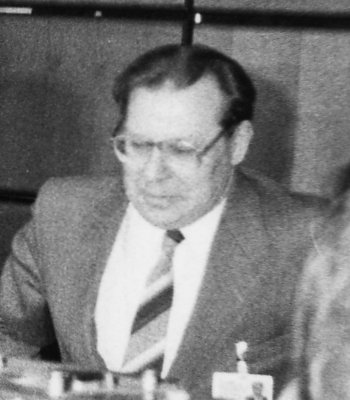
Years after the Soviet Union collapsed, former Soviet leader Mikhail Gorbachev said the Chernobyl disaster had played a major role in bringing the state down, arguing that the explosion had exposed the weaknesses and dishonesty built into the Soviet system. That verdict traces back to a single event on 26 April 1986, when Reactor No. 4 at the Chernobyl nuclear plant exploded, and to the cover-up that followed it.
The scale of the disaster was hidden almost immediately. A control-room technician reported a radiation reading of 3.6 Roentgen per hour to his superiors, a number that fit the state’s narrative that the situation was manageable. The meter used to take that reading was designed to max out at exactly 3.6; the real radiation levels outside the fractured reactor walls exceeded 15,000 Roentgen per hour, a dose already melting through concrete and steel. It was one of the largest man-made nuclear disasters in history, spreading harmful radiation hundreds of kilometres within hours.
The root of the failure went back further still. The USSR had for years concealed a design flaw in its RBMK reactors, in which control rods tipped with graphite could trigger a catastrophic power surge instead of an emergency shutdown under certain conditions. That flaw drove the reactor’s output to roughly 30,000 megawatts against a design capacity of 3,200 MW, splitting the core open.
Valery Legasov, the Soviet chemist who led the emergency response, later exposed these details to the international scientific community at a conference in Vienna, a move that brought swift retaliation from the Soviet state: the KGB monitored him, stripped him of his honours and isolated him from colleagues. He secretly recorded hours of testimony on audio cassettes before dying by suicide on 27 April 1988, exactly two years and one day after the explosion, ensuring his account would eventually surface. He was posthumously named Hero of the Russian Federation in 1996 and awarded the Order of Lenin.
The phrase widely linked to Legasov today, ‘Every lie we tell incurs a debt to the truth. Sooner or later, that debt is paid,’ was in fact written for the 2019 television series Chernobyl by screenwriter Craig Mazin rather than spoken by Legasov himself. Even so, it captures the substance of what his real tapes described: a state that hid a flaw, then hid a disaster, then hid its own casualties.
The official Soviet death toll from Chernobyl remains fixed at 31, a 1986 figure covering only immediate blast and acute-radiation deaths within three months. The World Health Organization estimates the true long-term toll, from cancers among the most exposed clean-up crews and residents, at 4,000 to 9,000 deaths.
Image credit: Wikimedia Commons/by IAEA Imagebank

Leave a Reply