Why failure teaches lessons that success never can, according to Bill Gates
Bill Gates argues that failure forces people to ask what went wrong, while success mostly prompts celebration rather than scrutiny.
Failure forces a specific kind of question that success rarely does. What went wrong. Which assumption turned out to be false. What would need to change next time. Success, by contrast, tends to prompt celebration rather than scrutiny, which means weak points can stay hidden long after they should have been addressed.
This is the core idea behind Bill Gates’ famous line: ‘Success is a lousy teacher. It seduces smart people into thinking they can’t lose.’ He wrote it in The Road Ahead, his 1995 book, at a time when Microsoft dominated personal computing almost completely.
The pattern Gates describes shows up well beyond business. Scientists refine theories after failed experiments. Athletes study losses more closely than wins. In every case, failure hands over information that a smooth run of success simply does not generate on its own.
Gates has offered similar ideas elsewhere too: ‘Your most unhappy customers are your greatest source of learning,’ and ‘It’s fine to celebrate success, but it is more important to heed the lessons of failure.’ Together, they point to the same balance between confidence and humility, one that keeps people asking questions even after things go well.
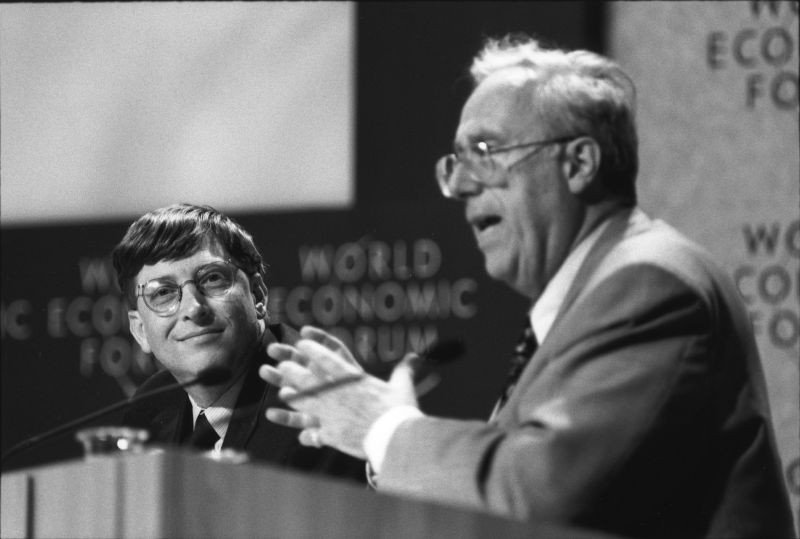
Image: Wikimedia Commons/by World Economic Forum




Leave a Reply