A stray cat became station master — and earned ¥1.1 billion for her town
A stray calico cat named Tama was appointed honorary station master of a struggling Japanese railway in 2007, and went on to generate more than ¥1.1 billion in economic impact for the region.
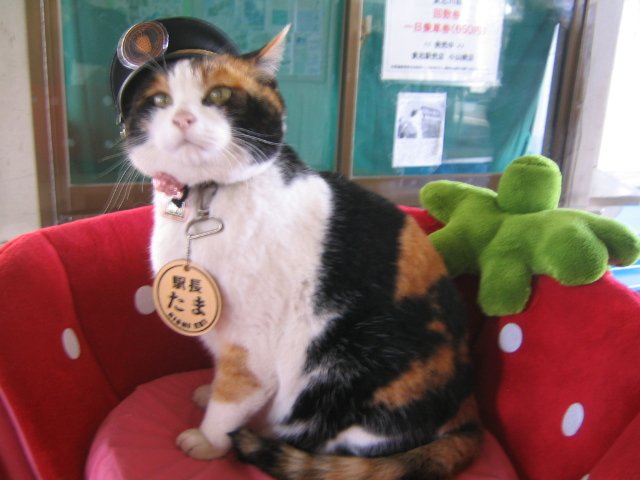
Economists rarely credit a cat with saving a railway line, but that is roughly what happened in Wakayama Prefecture, Japan. The Kishigawa Line, run by Wakayama Electric Railway, had spent years losing riders and looked close to closure after the company assumed control of operations in 2006.
Facing a shrinking passenger base and little appetite for a costly turnaround, the railway turned to a stray calico cat that already lived near Kishi Station and was well known to residents. In 2007, president Misutaka Kojima appointed her honorary station master, dressed her in a custom cap, and had her greet arriving and departing passengers.
What followed surprised even the railway. Passenger numbers rose by 17% in the first year after the cat, named Tama, took up her post, as visitors began arriving from across Japan and overseas specifically to see her. Souvenir sales, ridership and foot traffic at nearby restaurants and shops all climbed alongside her growing fame.
Professor Katsuhiro Miyamoto of Kansai University later calculated that Tama’s popularity added roughly ¥1.1 billion to the local economy in that first year, spanning tourism spending, merchandise, and broader business activity tied to her celebrity. The railway responded by introducing Tama-themed trains and merchandise and rebuilding Kishi Station itself with a roof shaped like a cat’s face.
Tama went on to be named Operating Officer of the railway, and tourism researchers and business schools have since studied her case as an example of authentic, low-budget place branding succeeding where conventional campaigns had failed. She died in 2015, and thousands attended memorial events held in her honour, including a traditional Shinto ceremony, after which she was enshrined at a local shrine tied to the railway.
Wikimedia Commons/by Sanpei

Leave a Reply