What an overloaded cargo hold may have done to sink a US Navy giant in 1918
Maritime historians believe improperly distributed manganese ore cargo, engine trouble and rough seas combined to sink the USS Cyclops in 1918, killing all 306 aboard.
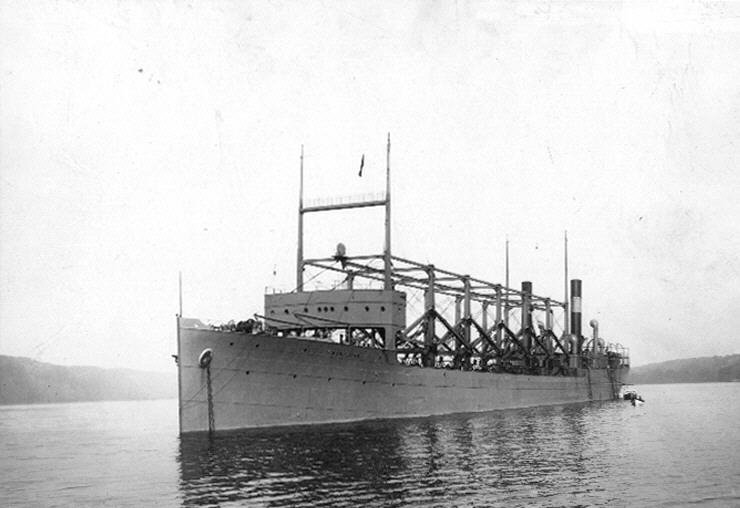
More than a century after the USS Cyclops vanished without a trace, maritime historians believe a combination of ordinary, explainable factors — not sea monsters or submarines — likely doomed the ship. The Cyclops had reportedly experienced engine problems during its final voyage, may have been operating on only one engine for part of the trip, and was carrying one of the densest cargoes a collier could transport: roughly 11,000 tons of manganese ore.
Former executive officer Conrad A. Nervig later argued that the ship may have suffered catastrophic structural failure after its extremely dense manganese cargo was improperly distributed, placing excessive stress on the hull. Combined with possible structural weaknesses and rough Atlantic conditions, the ship may have suffered a rapid catastrophic failure that left no opportunity to send a distress signal.
The 540-foot Proteus-class collier, built in Philadelphia and designed to transport coal for the Navy’s fleet, had been reassigned during World War I to carry strategic cargo, according to the U.S. Naval Institute. It departed Barbados on March 4, 1918, bound for Baltimore with 306 officers, sailors and passengers aboard, and was expected to arrive on March 13. It was never heard from again, and no wreckage has ever been confirmed despite numerous searches over the decades.
More than 100 years later, the disappearance continues to attract researchers because it highlights how even one of the largest vessels of its era could vanish without leaving a confirmed trace. Despite advances in ocean mapping and underwater exploration, the USS Cyclops remains one of the greatest unsolved mysteries in American naval history.


Leave a Reply