Why engineers couldn’t put out Centralia’s coal fire, despite trying everything
Engineers tried flooding, trenches and fly-ash barriers to stop Centralia's underground coal fire, but nothing worked.
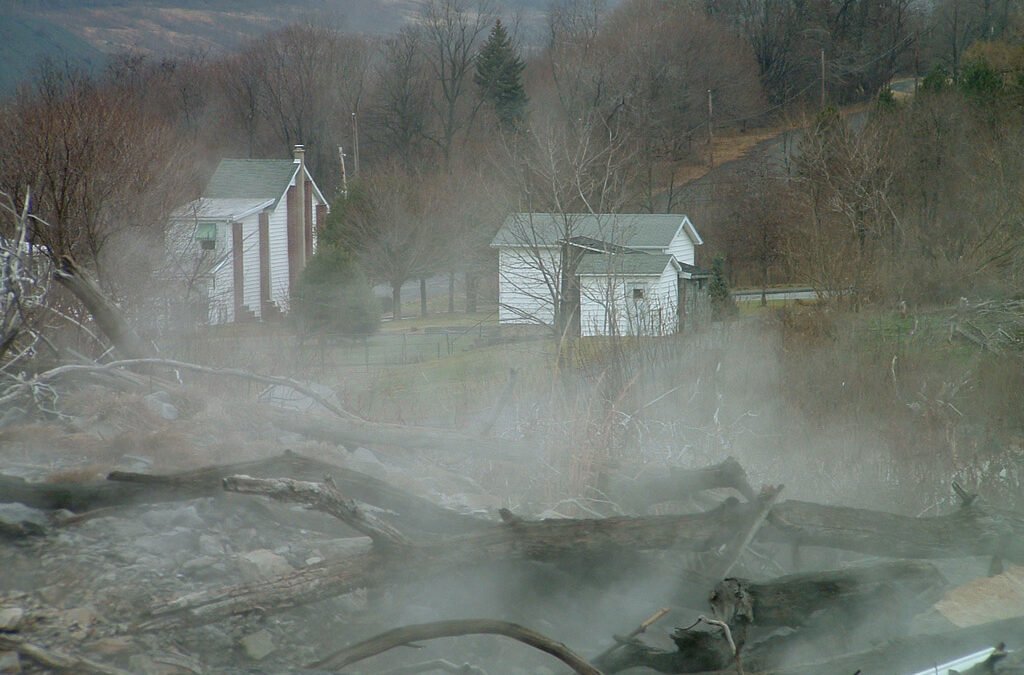
Engineers tried nearly every available technique to extinguish the underground coal fire burning beneath Centralia, Pennsylvania — flooding sections of the mine with water and rock slurry, building fly-ash barriers, excavating trenches, and attempting to isolate the burning coal. None of it worked.
According to researchers writing in the International Journal of Coal Geology, the Buck Mountain coal seam beneath the town lies under fractured, moderately dipping rock layers that continuously allow oxygen to circulate underground, feeding the combustion. The fractured geology, abandoned mine workings and sheer depth of the fire made containment both technically difficult and financially impractical.
The fire began in May 1962, when a routine pre-Memorial Day landfill burn in an abandoned strip-mining pit reached the exposed coal seam and ignited a blaze that spread through a network of abandoned mine tunnels. As it expanded through the 1960s, 1970s and early 1980s, it advanced along multiple underground fronts, producing carbon monoxide and causing dangerous ground instability — with one active fire front continuing to advance at roughly 20 metres a year, a pace that has held remarkably steady for decades.
More than 60 years after that landfill burn ignited the coal seam below, researchers continue studying Centralia because it illustrates the lasting consequences of abandoned mining infrastructure, complex geology and delayed intervention.
Leave a Reply