This Indian scientist’s research gave the world its first childhood leukemia treatment
Yellapragada Subbarow's work on folic acid at Lederle Laboratories led to aminopterin, one of the earliest drugs shown to induce remission in childhood leukaemia.
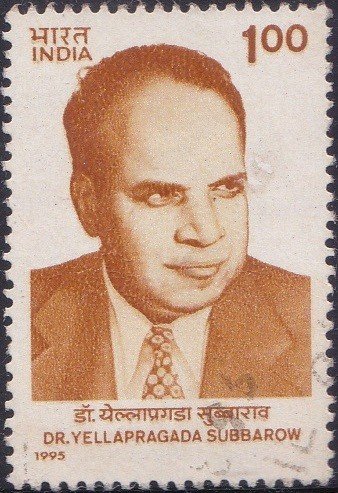
Before modern cancer treatment existed in its current form, a childhood leukaemia diagnosis offered little hope. That began to change because of research led by an Indian scientist named Yellapragada Subbarow.
At Lederle Laboratories in New York, which he joined in 1940, Subbarow’s work on folic acid laid the foundation for aminopterin, one of the earliest drugs shown to induce remission in childhood leukaemia. That pioneering research eventually led to the development of methotrexate, a medicine that remains an essential treatment for several cancers today, as well as conditions such as rheumatoid arthritis and psoriasis.
It wasn’t his only major contribution. Subbarow’s leadership also led to the discovery of Aureomycin, the first tetracycline antibiotic, opening the door to an entire family of antibiotics still used against bacterial infections worldwide. He also developed diethylcarbamazine, a medicine still recommended by the World Health Organization to help eliminate lymphatic filariasis, or elephantiasis.
Subbarow’s path to Lederle wasn’t easy. Born in 1895 in Bhimavaram, in present-day Andhra Pradesh, he failed his school examinations twice before passing on his third attempt, and travelled to the United States in 1922 with limited financial resources but an extraordinary ambition to improve human health.
He died in 1948 at 53, without a Nobel Prize to his name. India has since honoured him with a commemorative postage stamp, and his story is taught in medical institutions as an example of perseverance.
Image: Wikimedia Commons


Leave a Reply